40 Free Subitizing Flashcards 1–10 – Fun Number Recognition Games for Kids
Looking for a fun, hands-on way to help young learners recognize numbers without counting one by one?
These Free Subitizing Flashcards 1–10 are a wonderful addition to your preschool, Pre-K, kindergarten, or first-grade math activities!
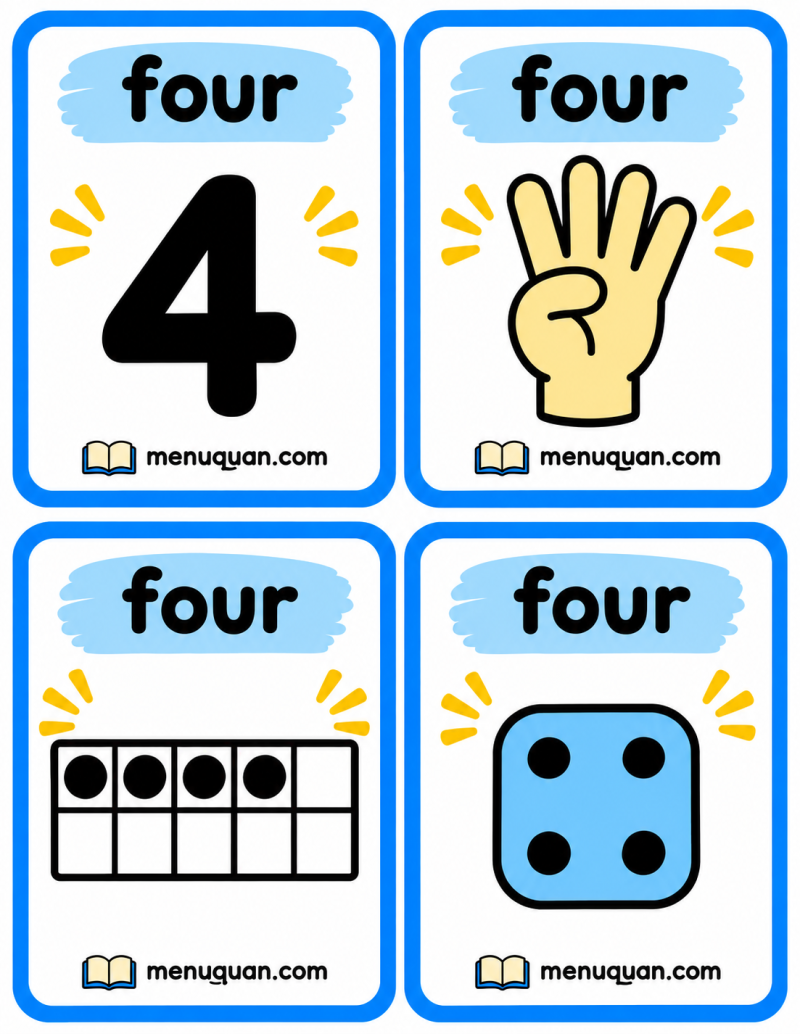
This printable set includes 40 colorful flashcards featuring numbers, finger patterns, ten frames, and dice dot patterns. Children will learn to recognize quantities, match different number representations, and build early number sense through playful activities.
Best of all, these cards can be used for classroom math centers, small-group instruction, morning warm-ups, homeschool lessons, and independent practice.
What Is Subitizing?
Subitizing is the ability to recognize a small quantity of objects quickly without counting each object individually.
For example, when children see three dots arranged like the number three on a die, they may immediately know there are three dots without counting, “one, two, three.”
This skill helps children develop:
- Quick number recognition
- Early number sense
- Visual pattern recognition
- Number composition and decomposition
- Mental math readiness
- Confidence with early addition and subtraction
There are two important types of subitizing:
Perceptual Subitizing: Instantly recognizing small groups of objects, typically around 1–4 items.
Conceptual Subitizing: Recognizing larger quantities by seeing familiar smaller groups. For example, a child might recognize eight as five dots plus three dots.
Our flashcards are designed to support both skills through visual number representations.
What’s Included in This Free Printable Set?
Our 40 Subitizing Flashcards cover numbers 1 through 10.
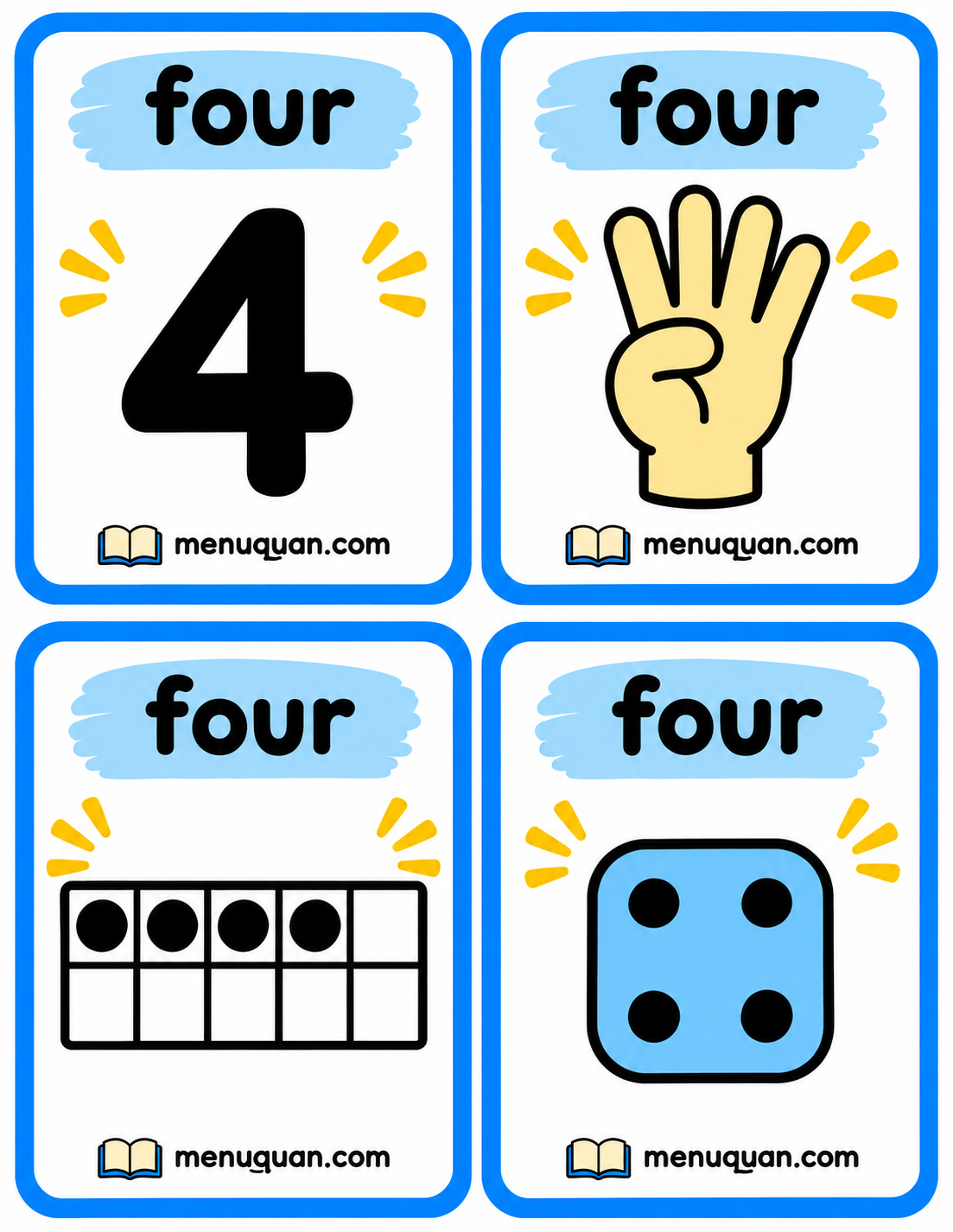
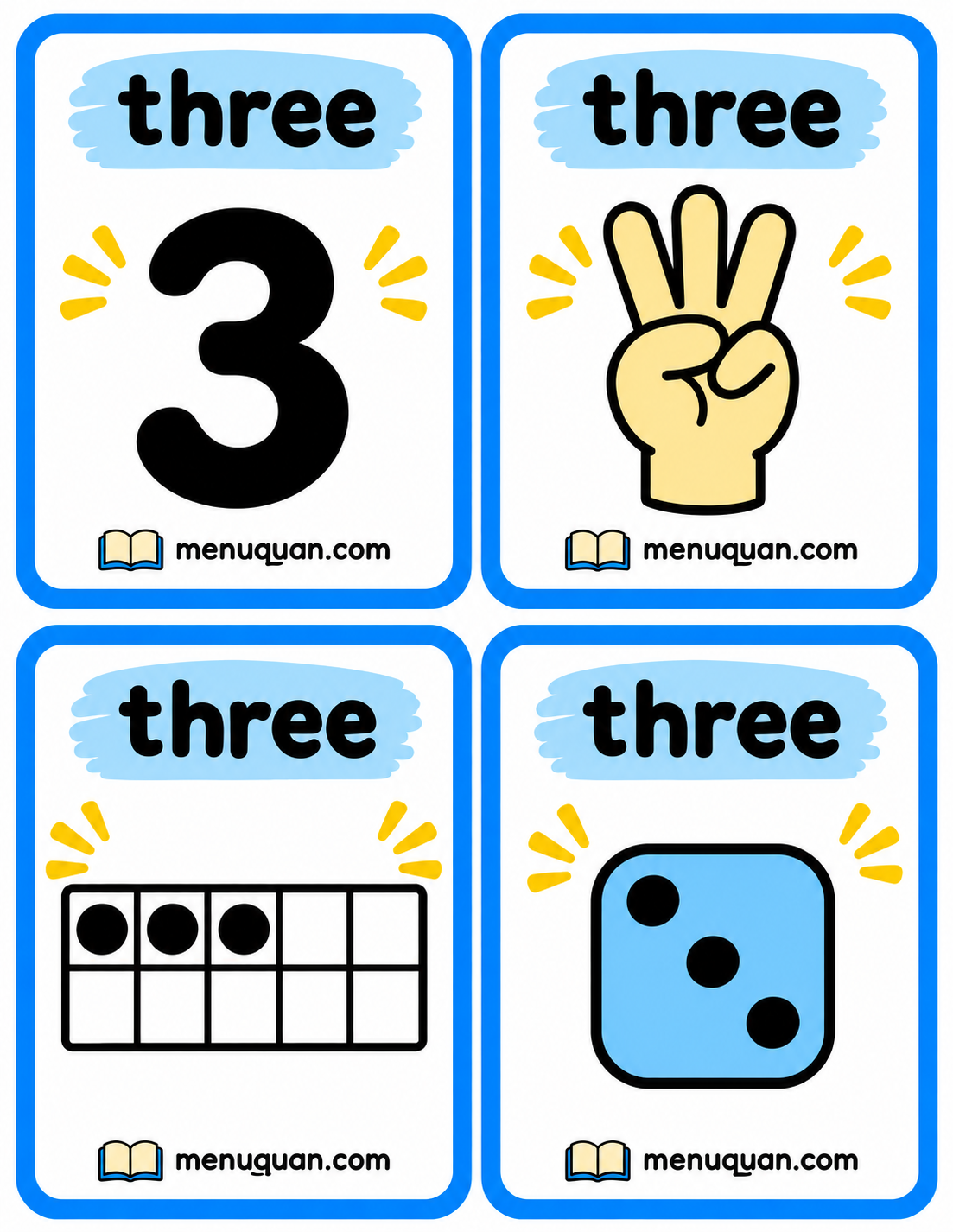
Each number is represented in four different ways:
1. Number Cards
Large, bold numerals help children connect written numbers with quantities.
2. Finger Counting Cards
Illustrated hands show different numbers using fingers. These cards help children connect visual patterns with their own hands.
3. Ten Frame Cards
Ten frames organize dots into two rows of five, making it easier for children to recognize groups of five and ten.
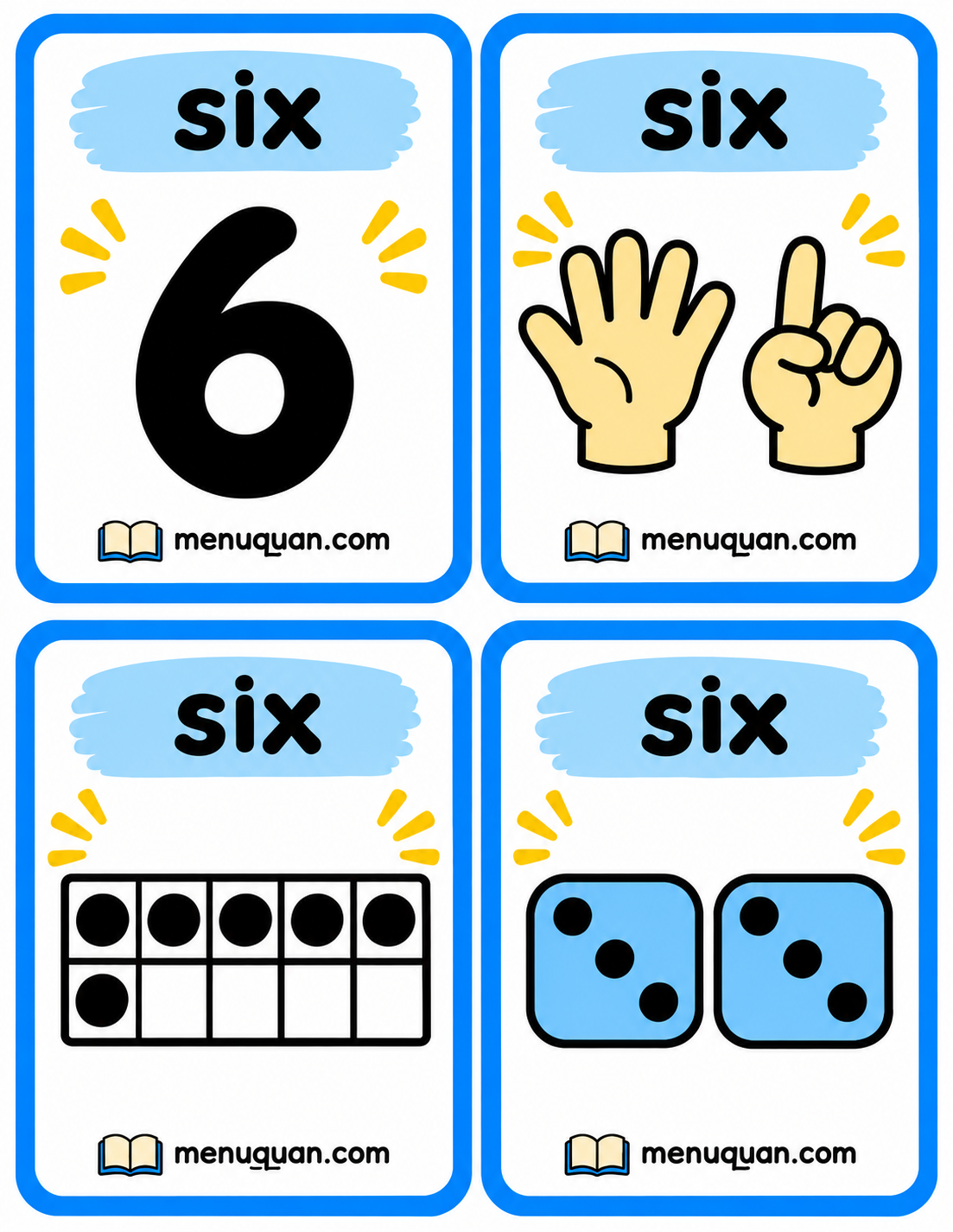
4. Dice Pattern Cards
Dice illustrations show numbers through familiar dot arrangements. For numbers greater than six, two dice are used to represent the total.
Each number has four matching cards, creating a total of 40 cards for numbers 1–10.
How to Prepare Your Subitizing Flashcards
Preparing these flashcards is simple and requires only a few supplies.
Materials Needed:
- Printed subitizing flashcards
- US Letter paper (8.5 × 11 inches)
- Scissors or a paper cutter
- Laminator and laminating sheets (optional)
- Small baskets, trays, or storage bags
- Dice (optional)
Preparation Instructions:
- Download the printable flashcards.
- Print the pages on US Letter paper, using the fit-to-page setting if necessary.
- Cut along the borders to separate the individual cards.
- Laminate the cards if you plan to use them repeatedly.
- Sort the cards by number or representation.
- Place the cards in labeled containers for easy classroom access.
Teacher Tip: Start with numbers 1–5 for beginners. Introduce numbers 6–10 once children become comfortable recognizing smaller quantities.
7 Fun Subitizing Games for Preschool and Kindergarten
These activities can be adapted for whole-class teaching, small groups, partner work, or individual learning.
Game 1: Flash and Say – Quick Number Recognition
Best for: Preschool, Pre-K, and Kindergarten
Players: Whole class or small groups
Time: 5–10 minutes
Objective: Recognize quantities quickly without counting individual objects.
How to Play
- Choose five to ten cards featuring dot patterns, ten frames, or finger patterns.
- Ask children to look carefully at each card.
- Hold up one card for approximately 1–3 seconds.
- Turn the card face down.
- Ask, “How many did you see?”
- Children say the number aloud or show the answer using their fingers.
- Reveal the card again and discuss the pattern.
For example, if the card shows five dots, students should recognize the pattern and say, “Five!”
Teacher Questions:
- “How many did you see?”
- “How did you know?”
- “Did you see a group of three and a group of two?”
- “Can you show that number with your fingers?”
Variation: For younger children, display the cards for longer before gradually reducing the viewing time.
Teaching Tip: Encourage quick recognition, but do not penalize children who still need to count. Counting is a useful stepping stone toward subitizing.
Game 2: Find the Match – Number Matching Game
Best for: Pre-K and Kindergarten
Players: 2–4 children
Time: 10–15 minutes
Objective: Match different visual representations of the same number.
How to Play
- Select the cards for numbers 1–5.
- Place the numeral cards in a row on a table.
- Shuffle the finger, ten frame, and dice cards.
- Give each child several cards.
- Children take turns matching their cards to the correct numeral.
- Encourage children to explain why the cards match.
For example, a child matches:
- Number 4
- Four fingers
- Four dots in a ten frame
- Four dots on a die
All four cards represent the same quantity!
Challenge: Introduce numbers 6–10 or mix all 40 flashcards for more advanced learners.
Game 3: Roll and Match – Dice Math Game
Best for: Kindergarten and First Grade
Players: 2–4 children
Time: 10 minutes
Materials: Flashcards and one or two dice
Objective: Recognize dice patterns and match them to written numbers.
How to Play
- Spread the number cards face up on the table.
- Give each player one die.
- A player rolls the die.
- The child recognizes the dot pattern.
- The child finds the corresponding number card.
- Repeat until everyone has several turns.
Advanced Version:
Use two dice and ask children to combine the quantities.
For example:
Die 1 shows 4.
Die 2 shows 3.
The child recognizes 4 + 3 = 7 and finds the number 7 card.
This variation introduces early addition while reinforcing visual number recognition.
Game 4: Number Hunt – Find the Hidden Numbers
Best for: Preschool, Kindergarten, and active learners
Players: Whole class or small groups
Time: 10–15 minutes
Objective: Identify matching quantities through movement and exploration.
How to Play
- Hide number representation cards around the classroom.
- Give each child a numeral card.
- Ask students to search for cards showing their assigned number.
- Children collect or point to the matching cards.
- Bring everyone together to check the matches.
For example, a child holding the number 6 searches for:
- Six fingers
- Six dots in a ten frame
- Dice showing a total of six
Variation: Organize a team challenge where each team must find all four representations of one number.
This game combines movement, visual recognition, teamwork, and mathematical thinking.
Game 5: Subitizing Memory Match
Best for: Kindergarten and First Grade
Players: 2–4 children
Time: 10–15 minutes
Objective: Improve number recognition, visual memory, and matching skills.
How to Play
- Select two representations for each number, such as numeral cards and ten frame cards.
- Shuffle the cards.
- Place them face down in rows.
- Each player turns over two cards.
- If both cards represent the same number, the player keeps the pair.
- If they do not match, turn them face down again.
- Continue until all pairs have been found.
The player with the most matching pairs wins.
Teacher Tip: Begin with numbers 1–5 to keep the game manageable. Add more cards as children gain confidence.
Game 6: Build the Number – Hands-On Math Center
Best for: Pre-K and Kindergarten
Players: Individual or small groups
Time: 10–15 minutes
Materials: Flashcards, counters, pom-poms, or small blocks
Objective: Connect visual quantities with hands-on representations.
How to Play
- Place several flashcards in a basket.
- Ask each child to choose one card.
- The child identifies the quantity shown.
- Children use counters or blocks to build the same quantity.
- Invite them to create another representation.
For example, if a child chooses a card showing eight, they might:
- Build a group of five counters and another group of three.
- Show eight fingers.
- Fill eight spaces in a ten frame.
Challenge: Ask children to find two different ways to make the same number.
For example:
8 = 5 + 3
8 = 4 + 4
This helps build a foundation for mental math.
Game 7: Subitizing Relay Race
Best for: Kindergarten and First Grade
Players: Two or more teams
Time: 10–15 minutes
Objective: Develop fast number recognition through an active team game.
How to Play
- Divide the class into two teams.
- Place a set of numeral cards on a table at the front of the room.
- Show both teams a dot pattern or ten frame card.
- The first player from each team walks quickly to the table.
- Each player selects the matching numeral.
- Check the answers and award one point for a correct match.
- Continue with the next players.
The team with the most points wins.
Safety Tip: Keep the playing area clear and have children walk rather than run, especially in smaller classrooms.
Variation: Replace the competitive format with a cooperative goal: Can the entire class correctly match ten cards?
How to Organize a Subitizing Math Center
These cards are excellent for independent and small-group learning stations.
Here is a simple 20-minute classroom plan:
| Time | Activity |
|---|---|
| 3 minutes | Teacher demonstrates Flash and Say |
| 5 minutes | Children practice matching cards |
| 5 minutes | Play Roll and Match with dice |
| 5 minutes | Build numbers using counters |
| 2 minutes | Review and clean up |
For larger classes, prepare four stations:
Station 1 – Flash and Say: Practice instant number recognition.
Station 2 – Number Match: Match numerals with visual patterns.
Station 3 – Dice Challenge: Roll dice and find the matching number.
Station 4 – Build the Number: Use manipulatives to recreate quantities.
Divide students into four small groups. Groups can rotate through the stations over multiple sessions, or spend approximately five minutes at each station during a longer math-center block.
How to Adapt These Flashcards for Different Ages
Preschool (Ages 3–4)
Focus on numbers 1–3, then progress to 5.
Use finger patterns, familiar dice arrangements, and simple matching games. Allow plenty of time for children to observe each card.
Pre-K (Ages 4–5)
Introduce numbers 1–5 and gradually extend to 10.
Encourage children to identify small groups quickly and match different representations of the same number.
Kindergarten (Ages 5–6)
Use all numbers 1–10.
Focus on structured ten frames, groups of five, and combining smaller quantities.
First Grade (Ages 6–7)
Use the cards for mental math warm-ups, number bonds, addition, and subtraction.
Ask questions like:
- “How many more to make ten?”
- “What two groups do you see?”
- “Can you show this number in another way?”
Helpful Teaching Tips
To make subitizing practice more effective:
- Keep practice short and consistent. Five minutes of daily practice can be more manageable than an occasional long session.
- Use familiar arrangements first. Begin with standard dice patterns and structured ten frames.
- Encourage explanations. Ask children how they recognized a quantity.
- Avoid rushing beginners. Give extra viewing time when needed.
- Gradually introduce larger numbers. Progress from 1–5 to 6–10.
- Celebrate different strategies. Children may recognize the same quantity in different ways.
Remember, the goal is not simply to answer quickly. The goal is to develop a deeper understanding of how numbers are organized and related.
Download Your Free Subitizing Flashcards 1–10
Ready to make early math practice more fun?
Download our Free Printable Subitizing Flashcards and start exploring number recognition through play!
Printable Features:
- 40 printable cards covering numbers 1–10
- Four visual representations per number
- Colorful, kid-friendly designs
- Easy-to-read numerals
- Ten frames and dice dot patterns
- Great for preschool and kindergarten
- Suitable for US Letter printing
- Perfect for math centers, morning work, and homeschool activities

Insert your printable download link above.
Print, cut, and reuse these cards for a variety of engaging number sense activities!
Frequently Asked Questions
What age is best for subitizing flashcards?
Subitizing activities are especially helpful for children ages 3–7. Younger children can begin with small quantities, while older children can explore number combinations and mental math.
Should children count the dots on the flashcards?
The main goal is to recognize quantities without counting one by one. However, counting is a natural learning strategy for beginners. Encourage children to notice familiar patterns as they develop confidence.
Can I use these cards for homeschool math lessons?
Absolutely! These cards work well for homeschool math warm-ups, number matching, hands-on counting, and simple dice games.
How many cards are included?
The printable set contains 40 cards covering numbers 1–10, with four representations for each number.
How can I make subitizing more challenging?
Try shorter viewing times, combining dice patterns, asking children to identify groups within larger quantities, or exploring different ways to make ten.
Make Early Math Learning Fun!
Subitizing is an important early math skill that helps children move beyond counting objects individually toward recognizing patterns and understanding number relationships.
With these Free Subitizing Flashcards 1–10, children can develop number sense while playing exciting, hands-on games at home or in the classroom.
Download your cards, set up a math center, and let the number fun begin!
Happy teaching and happy learning!
menuquan.com – Fun and Free Printable Activities for Kids