12 Months of the Year Worksheets for Kids | All About the Months Printables
What month comes right before November? Why does February sometimes have an extra day? Does November feel the same everywhere?
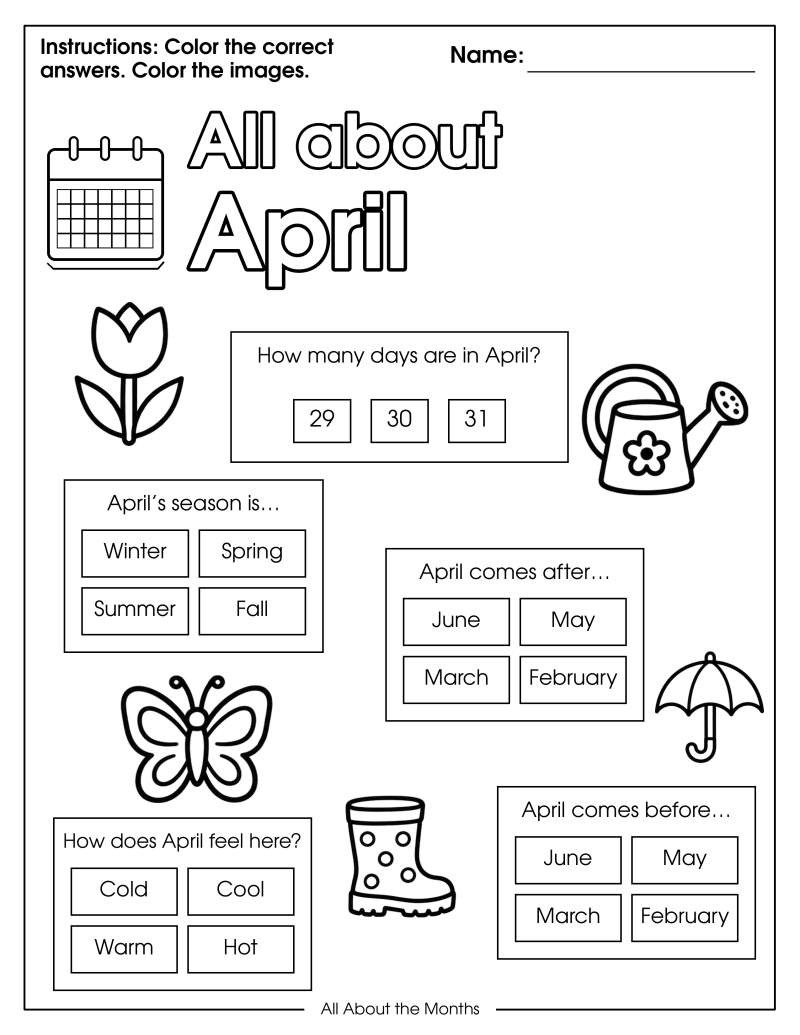
The All About the Months printable set gives children a simple way to explore questions like these. It includes 12 months of the year worksheets, one for each month from January through December. Children read short calendar questions, color their chosen answers, and finish by coloring the month title and seasonal pictures.
Use one page at the beginning of each month, bring out a few pages for a seasonal lesson, or work through the full set to help children see how the months fit together. The familiar layout lets kids focus on what changes from month to month.
What’s Included in the Printable Set?
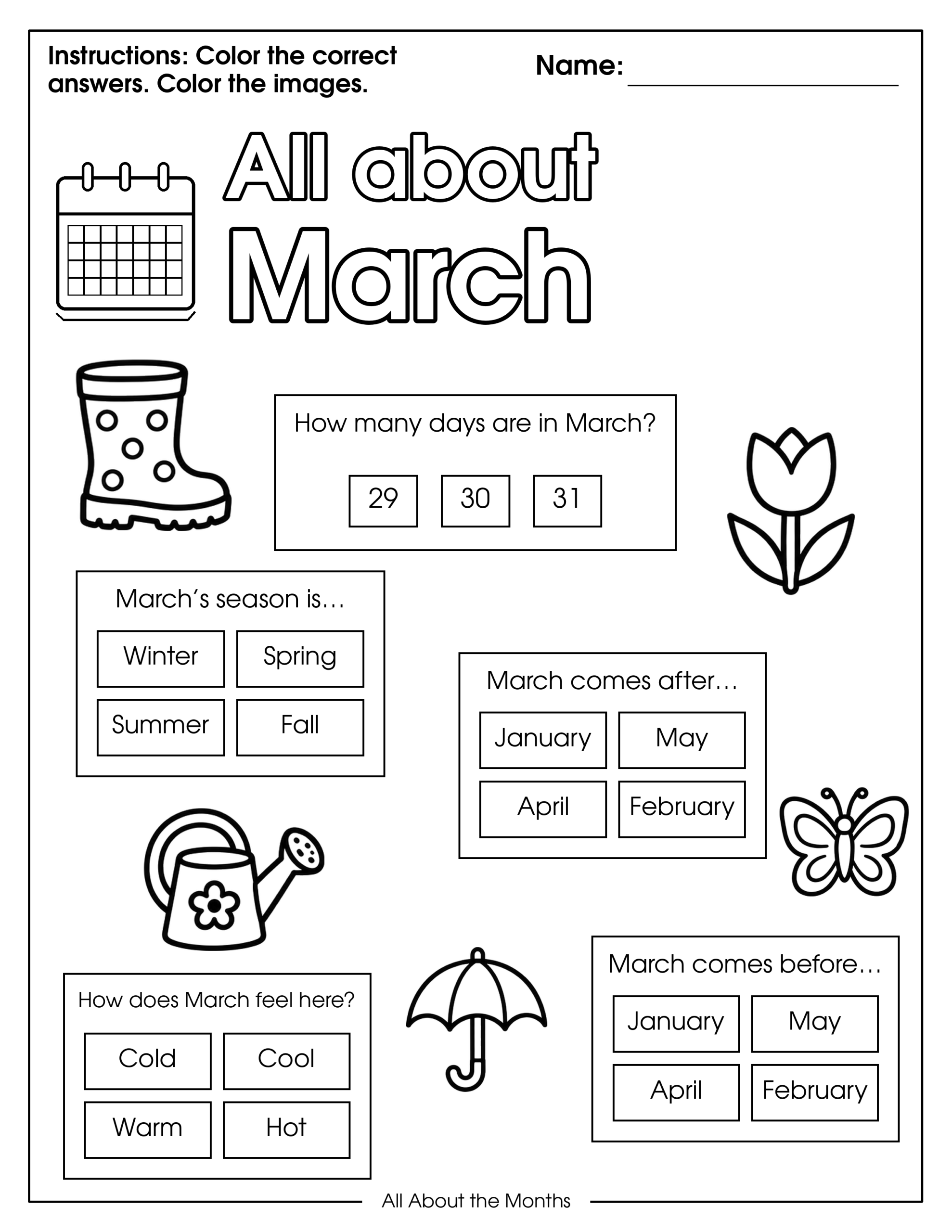
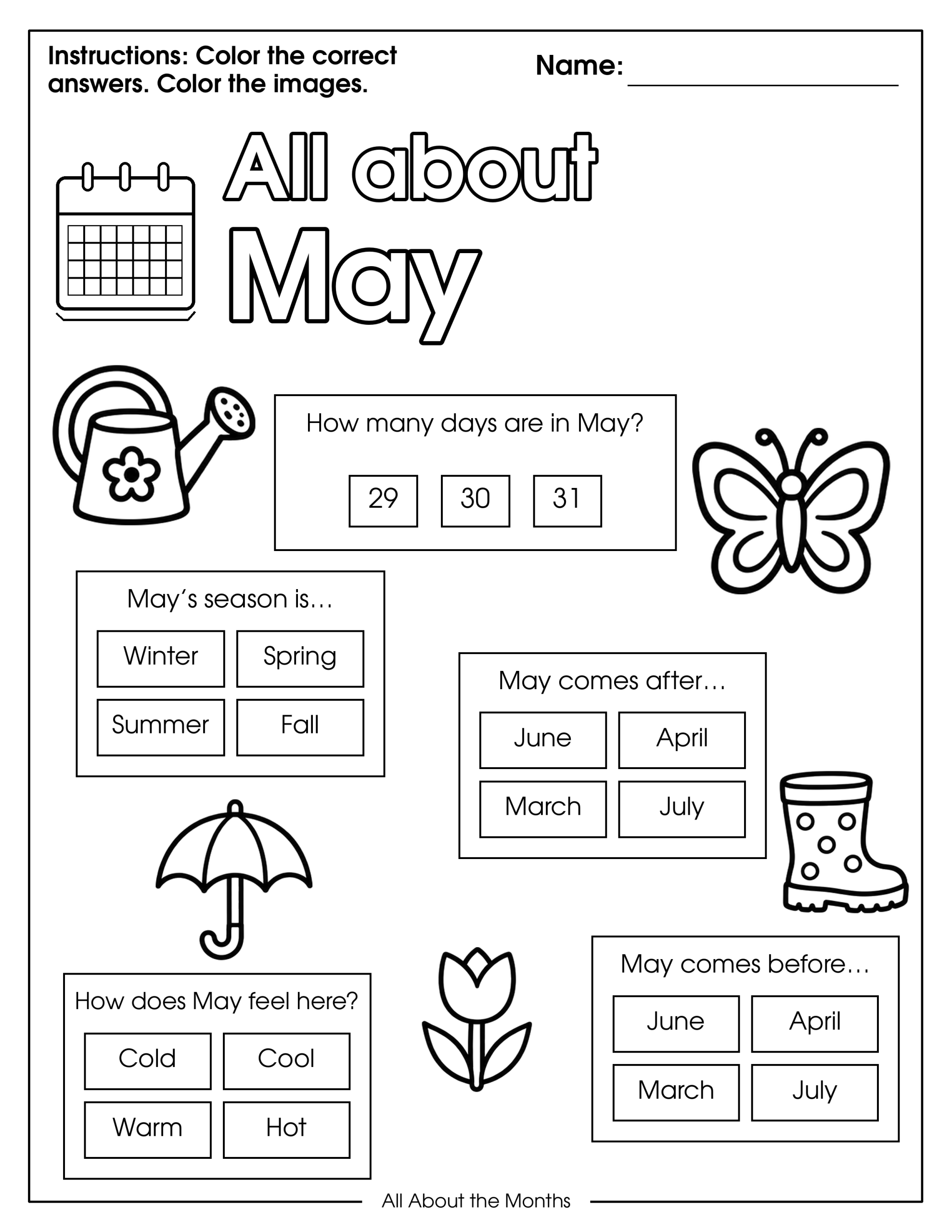
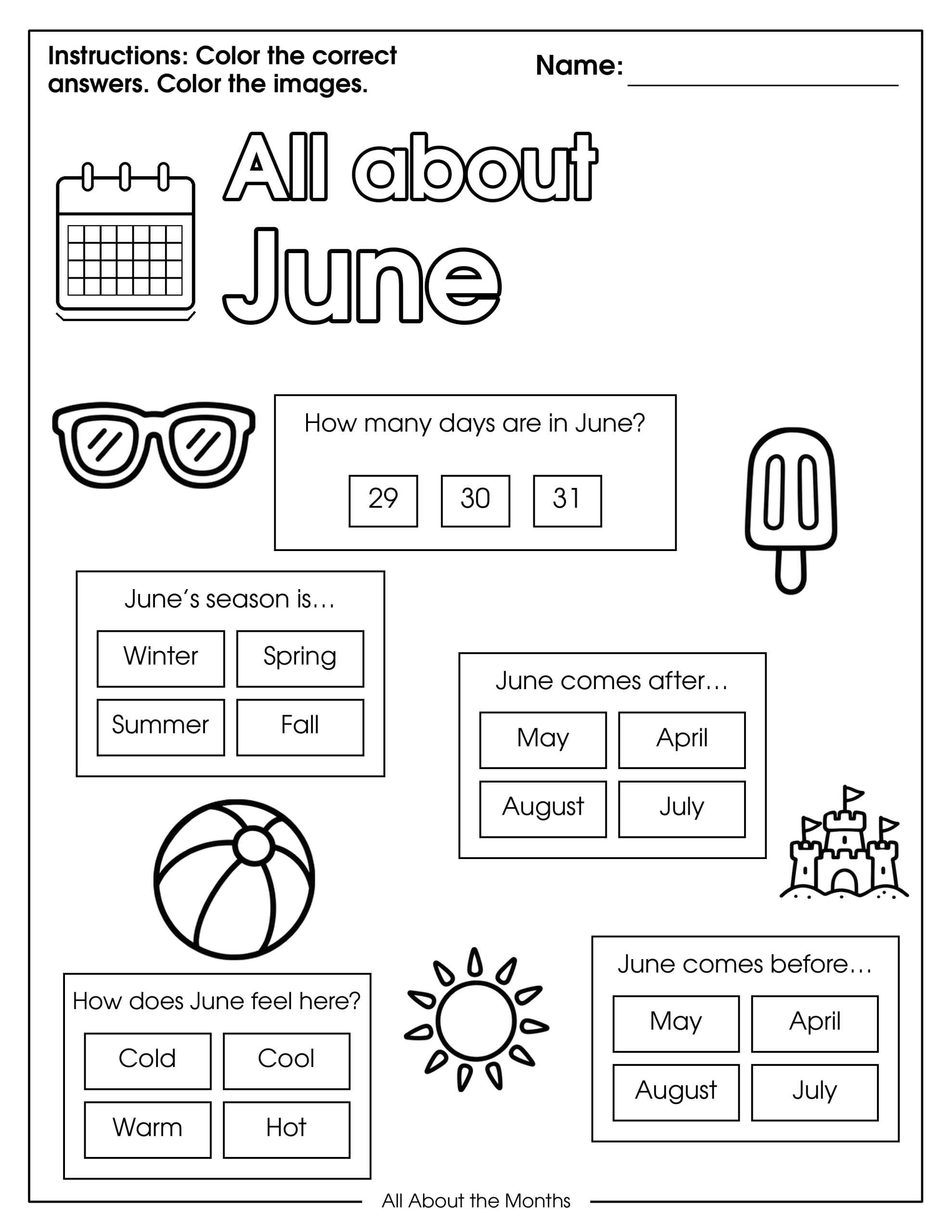
The set includes 12 individual black-and-white PNG files in US Letter size (8.5 × 11 inches) at 300 dpi. Each page features a large outline title, a place to write a name, a calendar illustration, and five question boxes.
| Question | What children practice |
|---|---|
| How many days are in this month? | Using a calendar to find the last numbered day |
| What season is this month in? | Grouping months into winter, spring, summer, and fall |
| What month comes before this one? | Finding the previous month |
| What month comes after this one? | Finding the next month |
| How does this month feel where you live? | Describing local weather using words such as cold, cool, warm, and hot |
The pages work well for ages 4–8, from preschoolers answering aloud with an adult to early elementary students using a calendar independently.
How to Use the Months of the Year Worksheets
You’ll need the printed page, crayons or colored pencils, and a calendar that shows the months in order. A wall calendar, desk calendar, or printed yearly calendar works well.
1. Find the month and say its name
Have your child write their name and read the large month title. Then ask them to find that month on a calendar. If they’re working on November, invite them to point to November and read the two months beside it.
With a beginning reader, say the name aloud together and have them look for its first letter. If two months begin with the same letter, compare the first few letters. March and May, for example, both begin with Ma, so the next letter helps tell them apart.
2. Find out how many days the month has
Ask your child to put a finger on the first day, then scan the calendar to find the last numbered day. On a November calendar, the final date is 30, so they color the box marked 30.
Try asking, “How did you know it was 30?” A child might say, “I found 30 in the last row, and there’s no 31.” That explanation tells you they used the calendar to check their answer.
The February worksheet asks about a common year, so the answer is 28 days. If you have calendars from two different years, compare their February pages and look for the extra day in a leap year.
3. Think about the season
Read the four choices together. The worksheets use the common three-month grouping for Northern Hemisphere seasons taught in many U.S. classrooms.
| Season | Months |
|---|---|
| Winter | December, January, February |
| Spring | March, April, May |
| Summer | June, July, August |
| Fall | September, October, November |
Ask children to find a picture that reminds them of the season. On the November page, they might notice a fall leaf or a sweater. Follow up with, “What have you noticed outside this month?” Children can talk about what they see in their own neighborhood, even when it looks different from the pictures.
4. Work out which month comes before and after
Read the question as a full sentence. “November comes after ___” asks for the month immediately before November. Have your child point to November and move one place back to October. “November comes before ___” asks for the month immediately after November, so they move one place forward to December.
If the wording is tricky, say the three months aloud together.
October → November → December
Then read the completed sentences. “November comes after October. November comes before December.” For January and December, show children how the sequence continues across the end of one year and the start of the next.
5. Choose a weather word and color the page
For the weather question, let children choose the word that best describes how the month usually feels where they live. Ask them to give a reason. They might say, “I picked cool because I usually wear a light jacket in November.”
If two children choose different words, ask what each child was thinking of. One might remember a cold morning while the other was thinking of a sunny afternoon. After answering, children can color the month title and illustrations.
Ways to Use the Worksheets at Home or in the Classroom
- Start a monthly calendar routine. On the first school day of the month, find the new month on the class calendar and complete its worksheet together. Keep the finished pages in a folder to revisit throughout the year.
- Set up an independent calendar center. Put out the current month’s worksheet, a yearly calendar, and a few crayons. Ask children to show a partner where they found an answer.
- Play a “find the missing month” game. Say two months with a gap between them, such as “October, ___, December.” Let children use the calendar to find the missing month, then ask them to make a puzzle of their own.
- Compare two months. Give children the October and November pages. Ask them to find one thing that stays the same and one thing that changes. Both are fall months in the worksheet’s season grouping, but October has 31 days and November has 30.
- Make a yearlong keepsake. Save one finished page each month. At the end of the year, let children arrange their pages from January to December and talk about which month they remember best.
How to Download and Print
- Click the download link below and choose the month you want to use.
- Save the PNG image to your device.
- Open the saved image and select US Letter (8.5 × 11 inches) in your print settings.
- Select Portrait orientation. Check the print preview and use Fit to Page if your printer clips the outer border.
- Print the current month for a quick calendar activity or print all 12 pages for a yearlong set.

Frequently Asked Questions
Can preschoolers use these worksheets?
Yes. Read the questions aloud, give children a calendar to point to, and let them color the answer they choose. For a short first session, start with the month name and one question about what comes next.
Do I need to complete the pages in order?
You can start with the current month. If the goal is to practice the order of all 12 months, use consecutive pages so children can compare the previous month, the current month, and the next month.
Can I use the same worksheets next year?
Yes. The pages are undated. Use a current calendar to check each month’s length and refer to a common-year calendar for the February question.